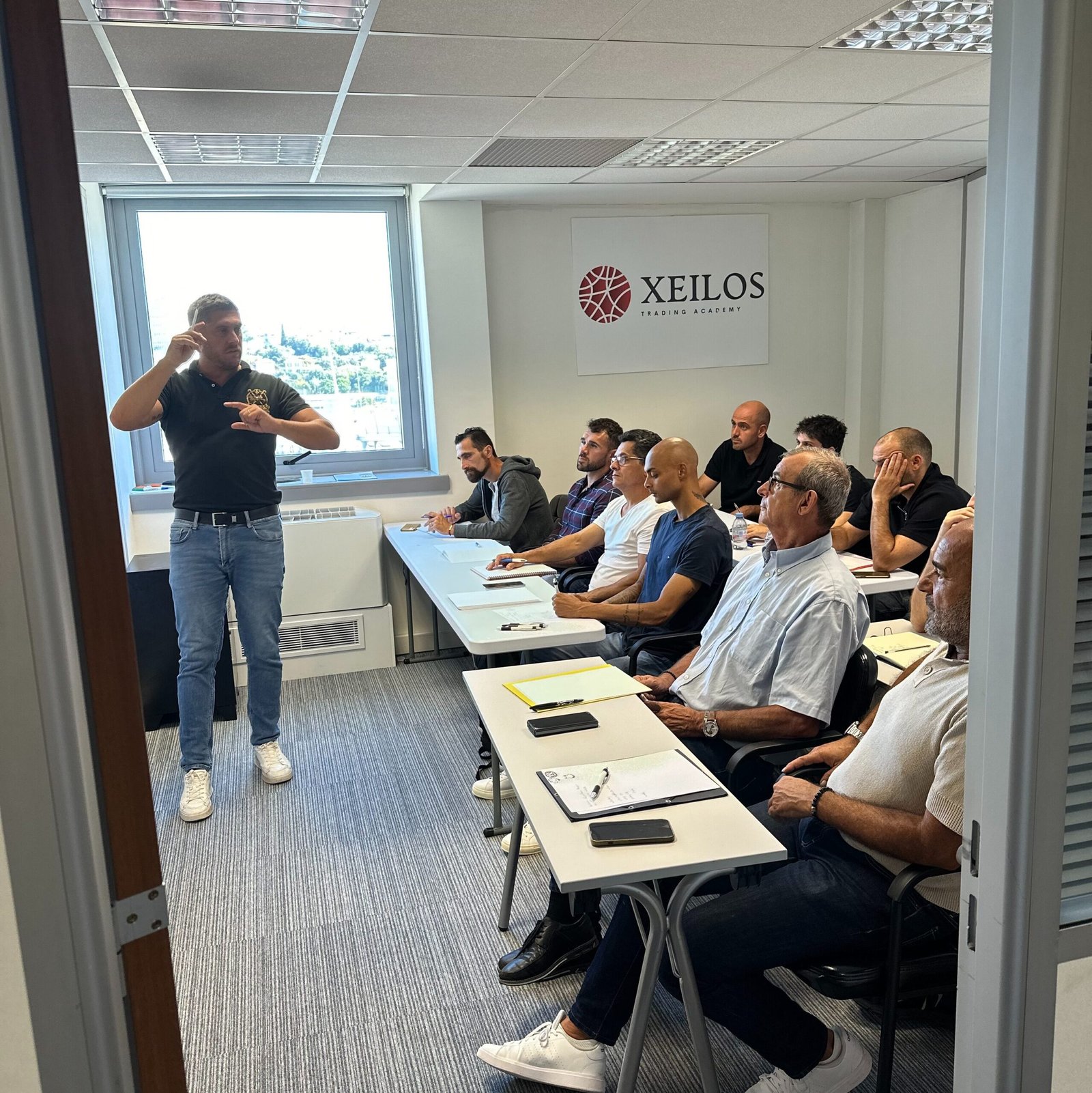
Managing and controlling operations on financial markets

stock market and trading

Stock Market & Expert Trading Program

Specialty: Trading and Scalping

Updated on 07/05/2026

The Scalping and Order Book training course, part of skills block #1 of the RNCP38601BC04 certified qualification, entitled «"Managing and controlling operations on financial markets"», This course, offered by Financia Business School, focuses on analyzing financial and economic information, assessing economic phases, selecting stocks and bonds, and monitoring portfolio performance. Participants will learn to make informed investment decisions using financial indicators and valuation models.

Learn more about this training in just a few minutes with our presentation video.

Training duration

136 hours 

Personalized appointment

THE KEY STRENGTHS OF THE TRAINING

Managing and controlling operations on financial markets

Acquire the skills of Block 4 in Market Finance
Are you looking to become a trader?

This block will allow you to develop
all the necessary skills
to succeed in this field

Analyze economic trends

Understanding current and future economic trends is crucial for making informed investment decisions.
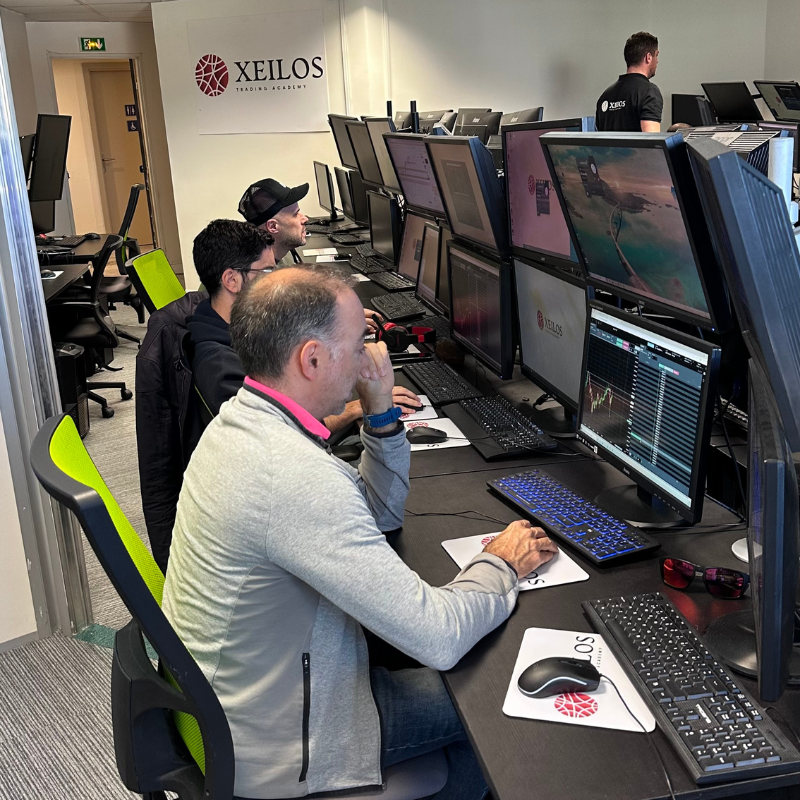
Implement analytical tools

Thanks to our practical methodology, you will learn to use powerful tools to analyze and retrieve financial data.
Incorporate ethical and environmental considerations

We believe in the importance of an ethical and responsible approach to investing, which is why we will guide you in integrating these considerations into your decisions.
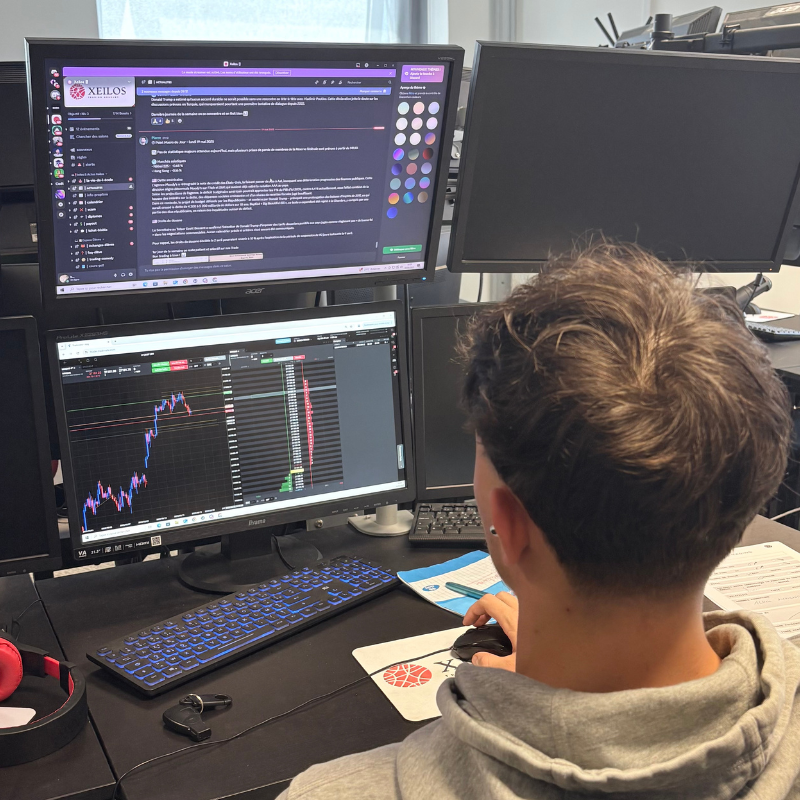
Analyze and manage financial risks

Learn how to assess your clients' risk profiles and use indicators
financial to achieve a new level of results and better control the
risks.

TRAINING OBJECTIVES

1. COMPLIANCE & FINANCIAL OPERATIONS
  • Mastering the financial operations cycle
  • Apply compliance procedures: KYC, AML/CFT, MiFID II
2. RISK CONTROL & MANAGEMENT
  • Control and secure financial transactions
  • Identify and manage operational risks
3. TRADING STRATEGIES & ANALYSIS
  • Developing multi-timeframe swing trading strategies
  • Use technical and financial analysis tools
4. REPORTING & OPERATIONAL MANAGEMENT
  • Produce reliable and relevant financial reports
  • Improve coordination between front, middle and back office

ELEMENTS OF THE TRAINING

STUDY OF CURRENT AND FUTURE ECONOMIC TRENDS

ANALYSIS OF CURRENT AND FUTURE ECONOMIC OUTLOOK
  • Introduction to the fundamentals of economics and its cycles.
  • Selection and use of reliable sources of economic information.
  • Analysis and interpretation of economic indicators and financial market trends.
  • Optimization and ongoing management of investments.

IDENTIFICATION OF INVESTMENT POTENTIAL

IDENTIFYING INVESTMENT OPPORTUNITIES
  • Fundamental analysis, business valuation and sector analysis.
  • Technical analysis (chart analysis) and presentation of technical indicators.
  • Stock selection and portfolio construction.
  • Performance monitoring and portfolio rebalancing strategy.

OPTIMIZING STOCK AND BOND PORTFOLIO

MAXIMIZING STOCK AND BOND PORTFOLIO
  • Analysis of listed securities.
  • Techniques for assessing the level of risk associated with different investments.
  • Real-time tracking of values and benchmark indices.
  • Performance review and continuous optimization.

The Program Managing and controlling operations on financial markets Xeilos prepares you to become an expert in all professions related to investments in financial instrument markets.

IMPLEMENTING AN EFFECTIVE ASSET ALLOCATION STRATEGY

DEVELOPMENT OF A HIGH-PERFORMING ASSET ALLOCATION PLAN
  • Introduction to the fundamentals of economics and financial markets for an effective asset allocation strategy.
  • Exploration and use of analytical tools and reliable information sources for trading.
  • Application of predictive models and risk assessment to optimize trading decisions.
  • Continuous monitoring and adjustment of trading strategies based on market developments.

Bond Selection: Optimizing Results

CHOOSING BOND EQUITIES TO OPTIMIZE RESULTS
  • Bond selection, opportunity assessment and optimization of the return/risk ratio.
  • Portfolio construction.
  • Investment Strategy.
  • Performance monitoring and portfolio rebalancing strategy.

BUSINESS DEVELOPMENT AND RISK PROFILING

BUSINESS GROWTH AND RISK PROFILING
  • Understanding ethics in finance.
  • Learn to evaluate a range of financial products based on the client's needs and objectives.
  • Communication and consulting.
  • Investment updates and ongoing professional development.
THE TRADERS' SCHOOL

XEILOS' STRENGTHS

Xeilos Trading Its aim is to democratize access to finance professions, which are often considered luxury careers. We firmly believe that everyone can unlock their potential and that the field of finance is accessible to all.

Join us to discover that it's possible!

SUMMARY of the Program

Overview of Content and Key Points

The Program

Stock Market & Trading Expert Program

General course

1. Financial and economic study

  • Training & Sources : Understand the economic basics, the cycles, and identify reliable sources of information.
  • Data Collection & Analysis : Monitor economic indicators, analyze trends qualitatively and quantitatively.
  • Interpretation & Strategy : To project future economic phases, understand their impact on investments, develop a strategy and assess the risks.
  • Report & Reassessment Document and present the results, and adjust the strategy.

2. Asset Allocation Strategy

  • Foundations & Analysis : Understanding the economy, sectors, relevant indicators, and analytical tools.
  • Forecasting & Communication : Use predictive models, anticipate risks, and communicate results for strategic adjustment.

3. Investment Identification

  • Fundamentals & Techniques : Use fundamental, technical, and chart analysis to evaluate potential investments.
  • EES criteria : Integrate ethical, environmental and social criteria into the investment strategy.

4. Bond Selection

  • Foundations & Analysis : Understand the characteristics of bonds and risks, evaluate issuers and identify opportunities.
  • Portfolio & Tracking Diversify, create a strategy, and rebalance according to market conditions.

5. Portfolio optimization

  • Risk Analysis & Management : Study the indices, analyze the listed values, and establish a timing strategy.
  • Monitoring & Improvement : Monitor performance, evaluate investments, and continuously adjust the strategy.

6. Business Development

  • Foundations & Consulting : Follow ethical principles, assess risk profiles, and learn to communicate effectively.
  • Conclusion & Follow-up Formalize transactions, plan regular updates, and participate in ongoing training.
The Objectives

The program's objectives

At the end of the program, The learner will identify the different mechanisms of macroeconomics and
its impact on its management decisions.

Sequence 1: Conduct a macroeconomic analysis based on all the information
financial and economic.
Sequence 2: Conduct a sector analysis.
Sequence 3: Selecting the different securities to include in the stock portfolio.
Sequence 4: Selecting bonds using updating tools.
Sequence 5: Monitoring the evolution of stock market and economic values.
Sequence 6: Advising a client on potential value creation opportunities.

Prerequisites

Prerequisites

No prerequisites

The exam

Training validation

Students are informed that the validation of their training is strictly conditional upon passing the final exam.

This examination consists of a mandatory case study, the objective of which is to assess the students' ability to appropriately mobilize the skills acquired during the training.

In order for their course to be validated, students must complete the case study under the prescribed conditions and obtain the minimum required grade in accordance with the established evaluation criteria.

If this exam is not passed, no certificate of completion of training can be issued.

The Success of Our Former Students

“In addition to the 10k in profits, I acquired know-how and technical skills…”

FRANK LIOTARD

TRAINING SUMMARY

Overview of the content and key points

Scalping and Order Book

GENERAL COURSE

1. Financial and economic study

  • Training & Sources : Understand the economic basics, the cycles, and identify reliable sources of information.
  • Data Collection & Analysis : Monitor economic indicators, analyze trends qualitatively and quantitatively.
  • Interpretation & Strategy : To project future economic phases, understand their impact on investments, develop a strategy and assess the risks.
  • Report & Reassessment Document and present the results, and adjust the strategy.

2. Asset Allocation Strategy

  • Foundations & Analysis : Understanding the economy, sectors, relevant indicators, and analytical tools.
  • Forecasting & Communication : Use predictive models, anticipate risks, and communicate results for strategic adjustment.

3. Investment Identification

  • Fundamentals & Techniques : Use fundamental, technical, and chart analysis to evaluate potential investments.
  • EES criteria : Integrate ethical, environmental and social criteria into the investment strategy.

4. Bond Selection

  • Foundations & Analysis : Understand the characteristics of bonds and risks, evaluate issuers and identify opportunities.
  • Portfolio & Tracking Diversify, create a strategy, and rebalance according to market conditions.

5. Portfolio optimization

  • Risk Analysis & Management : Study the indices, analyze the listed values, and establish a timing strategy.
  • Monitoring & Improvement : Monitor performance, evaluate investments, and continuously adjust the strategy.

6. Business Development

  • Foundations & Consulting : Follow ethical principles, assess risk profiles, and learn to communicate effectively.
  • Conclusion & Follow-up Formalize transactions, plan regular updates, and participate in ongoing training.

The program's objectives

At the end of the program, The learner will identify the different mechanisms of macroeconomics and
its impact on its management decisions.


Sequence 1: Conduct a macroeconomic analysis based on all the information
financial and economic.
Sequence 2: Conduct a sector analysis.
Sequence 3: Selecting the different securities to include in the stock portfolio.
Sequence 4: Selecting bonds using updating tools.
Sequence 5: Monitoring the evolution of stock market and economic values.
Sequence 6: Advising a client on potential value creation opportunities.

Prerequisites

Candidates wishing to join this program must meet one of the following criteria:

  • Hold a diploma of the level Bachelor's degree (Bac+3) (level 6), in the field covered by the training or in a related field; ;

Or

  • Be admitted based on application, after a personalized study of their academic and/or professional background.

Training Validation

Training validation

Students are informed that the validation of their training is strictly conditional upon passing the final exam.

This examination consists of a mandatory case study, the objective of which is to assess the students' ability to appropriately mobilize the skills acquired during the training.

In order for their course to be validated, students must complete the case study under the prescribed conditions and obtain the minimum required grade in accordance with the established evaluation criteria.

If this exam is not passed, no certificate of completion of training can be issued.

Ready to become a finance professional?

FAQ.

Do you have questions about our trading school? Find all the answers in our FAQ section.

What are the prerequisites for joining the school?

Candidates wishing to join this program must meet one of the following criteria:

  • Hold a diploma of the level Bachelor's degree (Bac+3) (level 6), in the field covered by the training or in a related field; ;

Or

  • Be admitted based on application, after a personalized study of their academic and/or professional background.
What are the career opportunities after the training?

Our students have access to a wide range of career opportunities in finance such as trader, portfolio manager, financial analyst, or even head of trading floor.