
You are interested in trading and you often hear about retail traders and institutional traders. But what is the real difference between the two?
And most importantly: What type of trading are you planning to do?
👉 In this article, we explain clearly the differences between an independent (individual) trader and one trader in a financial institution, in terms of Job function, working conditions, training, responsibilities and prospects.
The goal? To help you better understand your situation, and to choose the training path that best aligns with your objectives.
Individual or institutional trader, what's the difference?
A institutional trader works for a bank, hedge fund, or asset management company. He executes orders with large volumes, within a regulated framework.
A individual trader (or independent) trade for his own account, or with the capital of a prop firm, with total freedom but also personal responsibilities.
👉 Both profiles can be professional. What changes is the framework, the tools and the trajectory.
📞 Would you like to discuss this with a Xeilos trainer?

1. The institutional trader: the banking or financial framework
The institutional trader is evolving within a large structure as :
- A investment bank
- A asset management company
- A hedge fund
- A insurance company or a trading floor desk
Missions:
- Manage large volumes (sometimes several million euros)
- Execute orders on behalf of clients or for the bank's own account
- Working in conjunction with analysts, managers or risk teams
- Comply with compliance requirements (AMF, Basel III, etc.)
Required skills:
- Excellent knowledge of financial products
- Solid background in mathematics and statistics
- Ability to make quick decisions under pressure
- Teamwork
Classic route:
- Minimum of a 5-year degree (business school, engineering, financial markets)
- Passage mandatory AMF certification
📌 Synthesis
The institutional trader is a employee in the financial world, with high responsibilities and strict regulatory oversight.
💡 At Xeilos
We offer a Master's degree in financial markets, for profiles that are aiming for this type of structured career.
2. The individual trader: freedom, autonomy… and discipline
The individual trader, also called independent trader, evolves solo or via a prop firm.
He trades:
- His own capital
- Or that of a external financing company (prop firms like Apex, Bulenox, etc.)
Missions:
- Manage a personal or funded account
- Analyze the markets, define a strategy, execute your orders
- Ensure his own management of risk and his emotions
Required skills:
- Technical analysis (charts, indicators)
- Rigorous money management
- Autonomy and mental resilience
- Ability to test, improve, and maintain one's strategy
🚀 At Xeilos:
- Training RNCP certified, which can be financed via CPF
- Formula 1 month or 3 months at your own pace
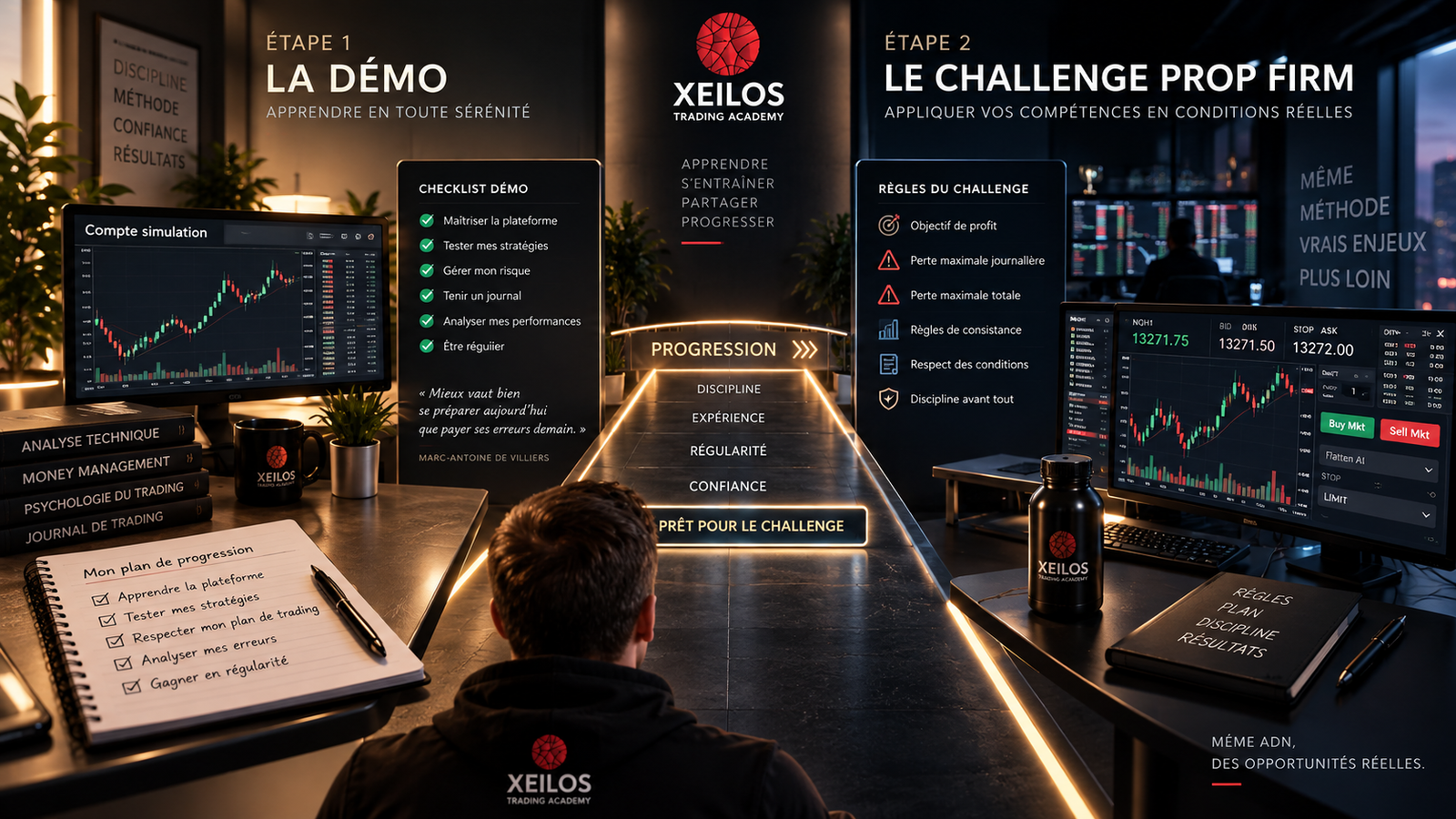
- Individual coaching + demo account training
- Access to professional platforms like Tradovate
💡 Prop firm model:
You take an assessment, and if you pass, you gain access to account funded from 25,000 to 100,000 $, without having to deposit your own capital.
Recommended route:
- Practical and structured training (e.g., Xeilos)
- RNCP certification if you want an official framework (and CPF funding)
- Training on a real-world platform Tradovate
📊 Key Figures :
More than 60 % students from Xeilos validate a firm prop within 2 months of their training.
3. Comparative table: institutional trader vs. individual trader
| Criteria | Institutional Trader 👔 | Private Trader 💼 |
|---|---|---|
| Status | Employee | Independent (self-employed or property firm) |
| Training | Master's degree + AMF | Certification training (e.g., Xeilos), no diploma required |
| Capital | That of the institution | Personally owned or financed (property firm) |
| Frame | Regulated, structured | Free, flexible but demanding |
| Personal risk | No one (employee) | Limited (property firm) or present (personal account) |
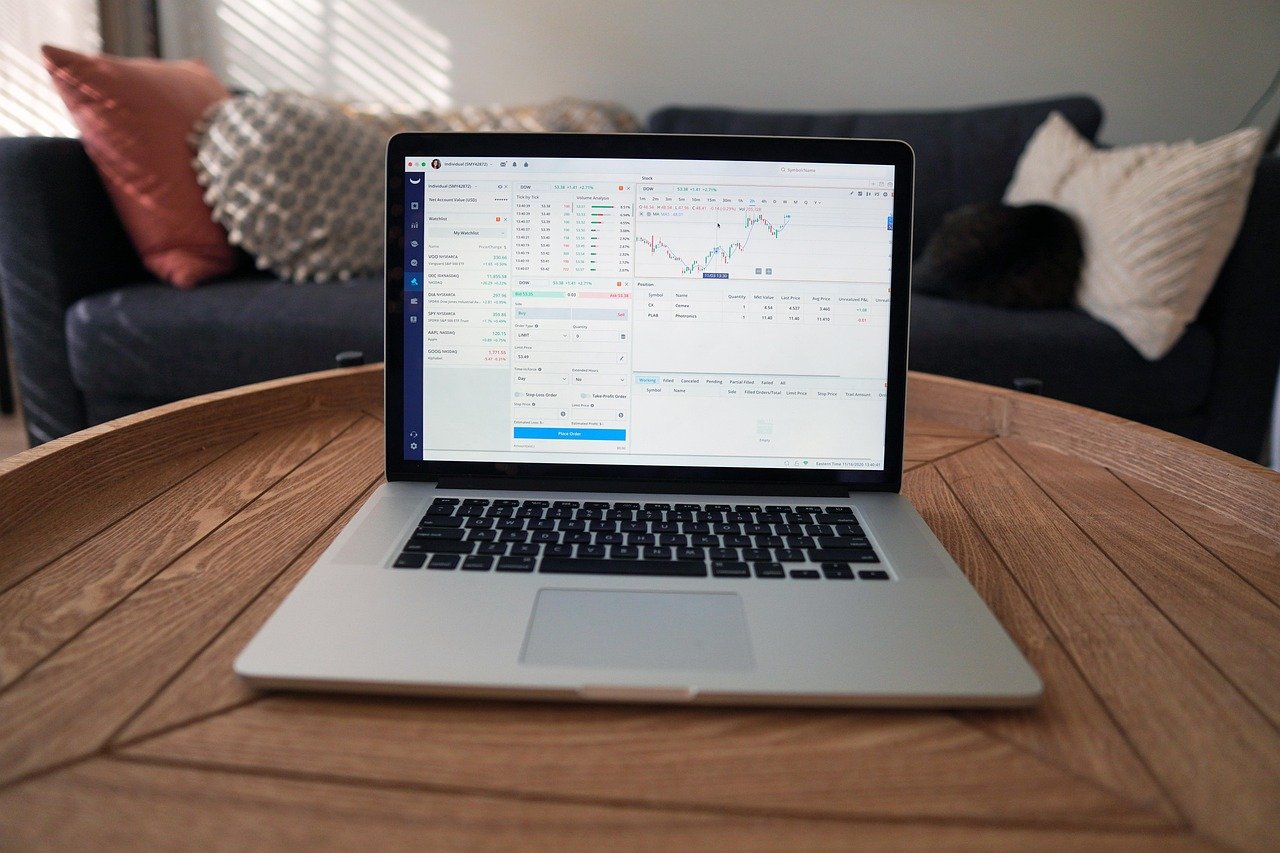
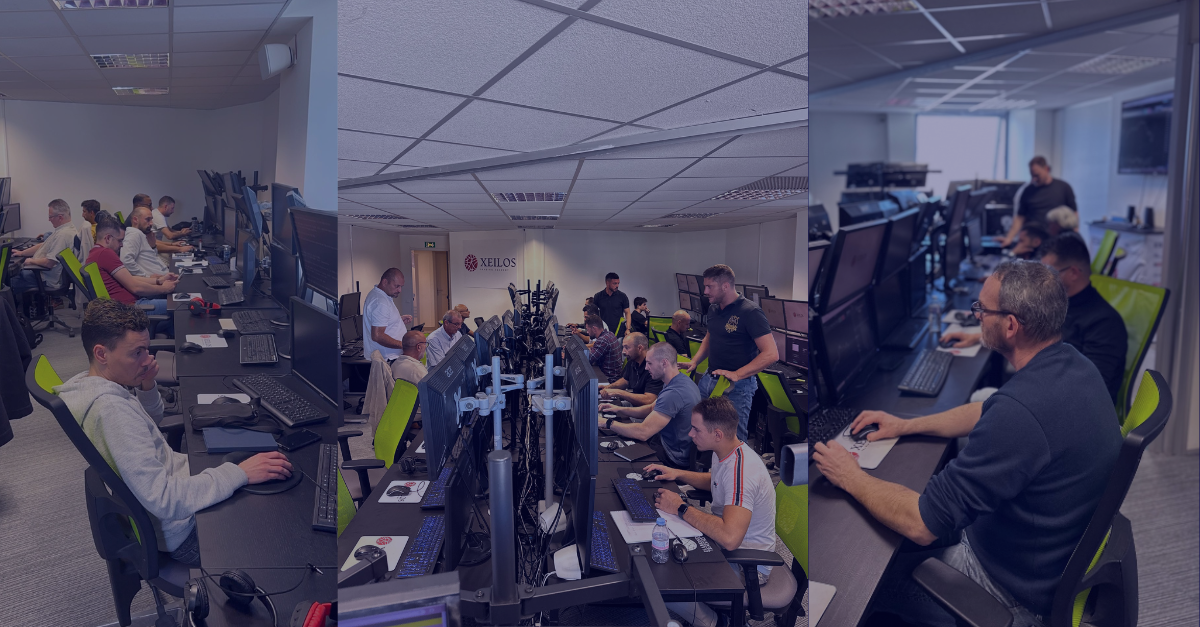
| Workplace | Trading Room | At home or in a coworking space |
| Tools | Institutional professional platforms | Tools like Tradovate, TradingView, MT5 |
📌 Synthesis
These are two different jobs. One involves the structure and constraints of salaried employment, the other the freedom and discipline of independence.
4. Which path is right for you?
✅ Opt for the institutional trading if :
- You enjoy a structured and collaborative environment
- Are you aiming for a career in financial markets?
- You are ready to pursue a university degree or a specialized master's degree.
🎓 At Xeilos, OUR expert master's degree in trading (registered with the RNCP) is made for you.
✅ Opt for the independent trading if :
- You are looking for geographical and time freedom
- You have a entrepreneurial spirit
- You want to train quickly and generate income through a prop firm
🎯 At Xeilos, 90% of our learners (%) undergo 1 to 3 months of training to become independent traders with capital financed.
Conclusion: two paths, one common point – the requirement
Whether you choose the path of institutional trader, an employee in a large bank, or that of the independent trader, financed by a prop firm:
👉 seriousness, training and discipline are indispensable.
At Xeilos we offer comprehensive, certified, and supported training programs, for you to provide all the keys to making a living from trading.
At the house of Xeilos, We help you clarify your project, train rigorously, and build a realistic and professionalizing career path, whatever your goal.
🎯 Ready to take action?
👉 Take 15 minutes with a Xeilos trainer to find out for free which program is right for you:
Useful links:
🔗 Certification training in trading – Xeilos
🔗 Master's degree in financial markets – Xeilos
























No comments yet