Psychology of Trading Training

Summary
  • The Strengths of the Training
  • Training Objectives
  • The Content of the Training
  • The Strengths of Our School
  • The Success of Our Former Students

Trading Psychology Training

Updated on 05/12/2025

Mastering psychology is essential for success in trading. Traders must manage their emotions, adopt rigorous discipline, and develop mechanisms for making rational decisions, even under stress. This training aims to provide the essential skills to understand and apply the principles of trading psychology, enabling participants to improve their performance and consistency.

Training duration

8 p.m. 

Personalized Appointment

Remote

Price

The strengths of the training

Acquire the skills of the Trading Psychology Training
Are you looking to become a trader?

This block will allow you to develop
all the necessary skills
to succeed in this field

A comprehensive approach to the psychology of trading

The training program delves into the emotional, cognitive, and behavioral mechanisms that influence traders' decisions. It offers practical tools to strengthen discipline, consistency, and self-control in a high-pressure environment.
Rich and interactive educational content

Participants benefit from a variety of learning materials: videos, PDFs, case studies, promoting the gradual and lasting assimilation of skills. Access to an e-learning platform allows for optimal flexibility in learning.
training provided by industry experts

The trainers come from the fields of finance and applied psychology, guaranteeing quality support and the transmission of knowledge rooted in professional practice.
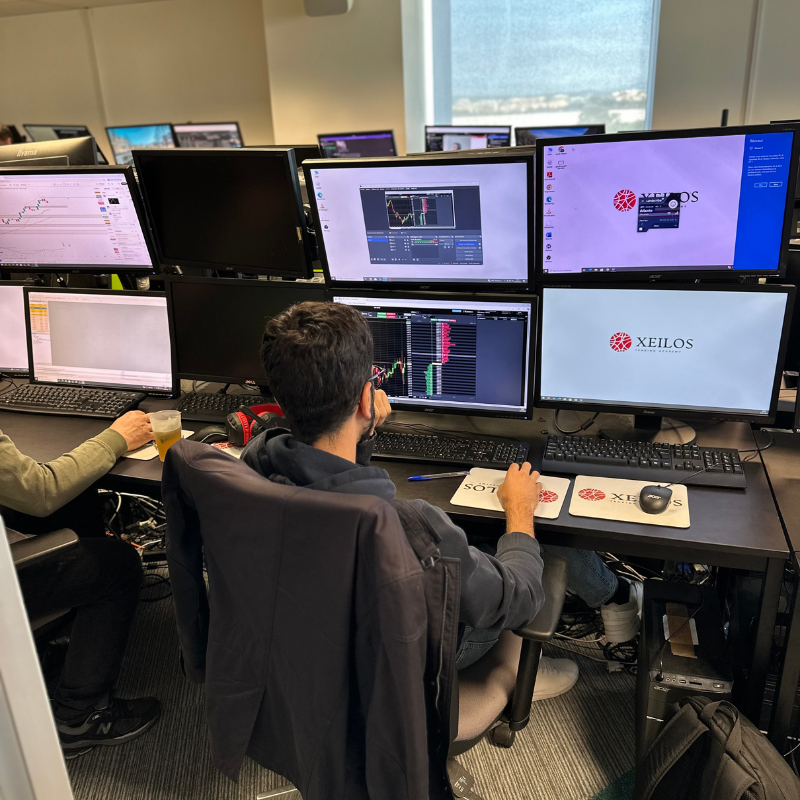
A program focused on sustainable performance

By emphasizing consistency, risk management, and adaptation to the trader's psychological profile, the training aims for a concrete improvement in long-term performance, while preserving mental balance.

Training Objectives

Understanding the psychological mechanisms of trading
  • Identify the dominant emotions that influence decisions (fear, greed, stress).
  • Recognizing cognitive biases and automatic decision-making.
  • Developing a better self-awareness to act with clarity in the face of the market.
Strengthen discipline and regularity
  • Establish a structured framework and an effective routine.
  • Apply clear trading rules tailored to your profile.
  • Reduce impulsive behavior in favor of rational decision-making.
Improving risk management and decision-making
  • Develop risk management strategies that are consistent with one's psychological profile.
  • Mastering hedging techniques and position adjustments.
  • Develop anticipatory reflexes to limit the emotional impact of losses.
Developing confidence and mental resilience
  • Working on self-confidence through practice and visualization.
  • Learning to manage phases of doubt and periods of declining performance.
  • Cultivating a stable mental posture in the face of market uncertainty and volatility.

Elements of the training

A program structured around essential themes

Dense and progressive content for sustainable skills development
  • 22 targeted modules covering all aspects of psychology applied to trading.
  • A pedagogical progression designed to strengthen skills at each stage.
  • A variety of topics: regularity, stress management, cognitive biases, trader profile.

Support from specialist trainers

Professional expertise at the service of quality management
  • Speakers from the fields of finance and behavioral psychology.
  • Field experience and pedagogical expertise for quality supervision.
  • Availability and responsiveness for individualized support throughout the entire process.

The program Trading Psychology – from Xeilos It trains participants to master the mental and behavioral dimensions essential for sustainable performance in financial markets. It prepares them for a more structured, disciplined trading practice aligned with their psychological profile.

Active and engaging teaching methods

A dynamic, action-oriented, and experimental learning approach
  • Combination of theory, practical cases, simulations and self-assessments.
  • A participatory approach that promotes involvement and real-world application.
  • Use of interactive tools to permanently anchor knowledge.

Accessible technical and educational resources

Modern tools for flexible and effective training
  • Downloadable course materials, explanatory videos and interactive exercises.
  • An intuitive and remotely accessible e-learning platform.
  • Practical tools for immediate application of learning in real-world situations.
THE TRADERS' SCHOOL

XEILOS' STRENGTHS

Xeilos Trading Its aim is to democratize access to finance professions, which are often considered luxury careers. We firmly believe that everyone has the potential to earn a good living through trading and that the field of finance is accessible to all.

Join us to discover that it's possible!

Program Summary

Overview of Content and Key Points

The Program

Expert Trading Program

General course

1. Financial and economic study

  • Training & Sources : Understand the economic basics, the cycles, and identify reliable sources of information.
  • Data Collection & Analysis : Monitor economic indicators, analyze trends qualitatively and quantitatively.
  • Interpretation & Strategy : To project future economic phases, understand their impact on investments, develop a strategy and assess the risks.
  • Report & Reassessment Document and present the results, and adjust the strategy.

2. Asset Allocation Strategy

  • Foundations & Analysis : Understanding the economy, sectors, relevant indicators, and analytical tools.
  • Forecasting & Communication : Use predictive models, anticipate risks, and communicate results for strategic adjustment.

3. Investment Identification

  • Fundamentals & Techniques : Use fundamental, technical, and chart analysis to evaluate potential investments.
  • EES criteria : Integrate ethical, environmental and social criteria into the investment strategy.

4. Bond Selection

  • Foundations & Analysis : Understand the characteristics of bonds and risks, evaluate issuers and identify opportunities.
  • Portfolio & Tracking Diversify, create a strategy, and rebalance according to market conditions.

5. Portfolio optimization

  • Risk Analysis & Management : Study the indices, analyze the listed values, and establish a timing strategy.
  • Monitoring & Improvement : Monitor performance, evaluate investments, and continuously adjust the strategy.

6. Business Development

  • Foundations & Consulting : Follow ethical principles, assess risk profiles, and learn to communicate effectively.
  • Conclusion & Follow-up Formalize transactions, plan regular updates, and participate in ongoing training.
The Objectives

The program's objectives 

Sed ut perspiciatis unde omnis iste natus error sit voluptatem accusantium doloremque laudantium, totam rem aperiam, eaque ipsa quae ab illo inventore veritatis et quasi architecto beatae vitae dicta sunt explicabo. Nemo enim ipsam voluptatem quia voluptas sit aspernatur aut odit.

Prerequisites

Prerequisites

No prerequisites

Training Summary

Overview of Content and Key Points

Trading Psychology Training

General course

Regularity and stress management in trading

  • Structure & Discipline : Establish a routine to limit impulsive decisions.
  • Mental stability : Reduce uncertainty and psychological pressure.
  • Sustainable performance : Improve the consistency of results over the long term.

Risk hedging techniques

  • Financial tools : Understanding the use of options, futures, swaps.
  • Strategic approach : Reduce potential losses while balancing the portfolio.
  • Resilience : Adopt a proactive risk management approach.

Self-confidence and emotional discipline

  • Mental techniques : Use visualization and positive affirmations.
  • Emotional stability : Maintaining confidence in the face of market uncertainty.
  • Continuous Progress : Rely on training, mentoring and experience.

Letting go and strategic effectiveness

  • Questioning : Identify ineffective behaviors and strategies.
  • Mental flexibility : Overcoming psychological blocks.
  • Optimization : Refocus efforts towards more effective approaches.

Customized trading framework and routine

  • Planning : Define a structured daily trading plan.
  • Optimized environment : Create an environment conducive to concentration.
  • Enhanced discipline : Reduce emotional errors.

Market choice based on psychological profile

  • Self-analysis : Identify your decision-making style and risk tolerance.
  • Markets adapted : Matching your profile to the markets (stocks, forex, crypto, etc.).
  • Strategic alignment : Develop a customized trading method.

Maintaining mental balance in stressful situations

  • Emotional stability : Managing the ups and downs of the market.
  • Identification of disruptors : Recognize internal/external sources of stress.
  • Sustainable Resilience : Making rational decisions despite the pressure.

Risk management and risk aversion

  • Psychological profile Understanding one's own risk aversion.
  • Balancing strategies : Avoid paralysis or excessive caution.
  • Measured opportunities Finding a balance between safety and performance.

Avoid excessive commitments

  • Identifying excesses : Identify the positions maintained through denial or justification.
  • Regulatory tools : Use stop-losses and post-trade analysis.
  • Rational decision : To promote emotional detachment from positions.

Herd instinct vs. strategic autonomy

  • Group behavior : Recognizing the influence of collective trends.
  • Personal discipline : Develop an independent and stable method.
  • Performance optimization Reconciling network and autonomy for better judgment.

Correcting risk perception

  • Cognitive biases : Identify instances of overconfidence or caution.
  • Objective evaluation : To rely on structured analytical tools.
  • Strategic readjustment : Adapting one's approach to the actual perceived risk.

Setting limits in trading

  • Personal framework : Set financial, time and emotional boundaries.
  • Impulsivity Prevention : Structuring decisions with clear rules.
  • Mental balance : Maintaining consistent discipline without mental overload.

Managing periods of doubt

  • Uncertainty analysis : Distinguishing between constructive doubt and paralysis.
  • Building trust Transforming doubts into areas for progress.
  • Balanced critical stance : Objectively evaluate the results and adjust.

Understanding your trader profile

  • Risk typology : Identify whether one is conservative, balanced or dynamic.
  • Strategy-personality alignment : Adapt the methods to one's mental preferences.
  • Individual optimization Balancing safety, profitability and psychological comfort.

Overcoming misplaced hope

  • Strategic disillusionment : Recognizing unrealistic expectations.
  • Rational motivation : Use hope as a driving force, not as a trap.
  • Emotional discernment : Taking a step back from emotional projections.

Preventing trading obsession

  • Warning signs : Identify addictive behaviors.
  • Regulation of practice : Establish break times and clear boundaries.
  • Work-life balance : Maintaining good mental and financial health.

The profile of the contrarian trader

  • Strategic positioning : Understanding the advantages of going against the grain.
  • Profit management Avoid euphoria, distribute profits thoughtfully.
  • Financial discipline : Consolidate the results and maintain a rational course.

Automatic decisions and position-taking

  • Identification of automatic behaviors : Identify impulsive or routine choices.
  • Strategic thinking : Replace habits with conscious analysis.
  • Action optimization : To act in a manner consistent with trading objectives.

Common factors of successful traders

  • Analysis of recurring patterns : Study the biases, common errors and strengths.
  • Self-diagnosis : Identify your own risky behaviors.
  • Targeted evolution : Implement corrective strategies to make progress.

Neuroscience and trading decisions

  • Brain function : Understanding the mechanisms that influence decision-making.
  • Emotional Management Regulating reactions through the contributions of neuroscience.
  • Cognitive reinforcement : Improve concentration, resilience and mental efficiency.

Develop patience to succeed

  • Impulse control : Learning to wait for favorable configurations.
  • Behavioral discipline : Follow your plan rigorously without rushing.
  • lasting results : Reduce errors and strengthen long-term consistency.

Identifying and overcoming trading obsession

  • Detection of excessive behavior : Identify the signs of addiction or over-involvement.
  • Regulatory strategies : Establish healthy and balanced routines.
  • Preserving the global balance : Maintain a clear boundary between trading and personal life.

The program's objectives

Understanding the psychological mechanisms of trading

  • Identifying emotions : Identify the emotional factors influencing decisions (stress, fear, greed).
  • Cognitive biases Understanding the mental distortions that affect analysis and judgment.
  • Self-awareness : Develop a better understanding of one's behavior in relation to the market.

Strengthen discipline and regularity

  • Structured framework : Establish clear and reproducible routines.
  • Decision stability : Reduce impulsive actions in favor of methodical decision-making.
  • Effective perseverance : Maintain consistency in actions and results.
Improving risk management and decision quality
  • Strategies adapted : Develop a risk management strategy that is in line with one's psychological profile.
  • Mastery of techniques : Use hedging and loss limitation tools.
  • Thoughtful anticipation : Making rational decisions even in contexts of stress or uncertainty.
Developing self-confidence and mental resilience
  • Mental strengthening : Using psychological techniques to build trust.
  • Managing critical periods : Coping with doubts and periods of declining performance.
  • Emotional balance : Maintaining lasting mental stability in the face of market fluctuations.

Prerequisites

No prerequisites

Ready to become a finance professional?

FAQ.

Do you have questions about our trading school? Find all the answers in our FAQ section.

What are the prerequisites for joining the school?

No specific diploma is required to join our trading school. However, we prioritize candidates who are passionate and motivated by finance and financial markets.

What are the career opportunities after the training?

Our students have access to a wide range of career opportunities in finance such as trader, portfolio manager, financial analyst, or even head of trading floor.